
Free Guide
Music at Home for Beginners:
Many parents want to introduce music at home but worry about doing it “the right way.”
This short guide offers simple, low-pressure ideas for helping children explore music, creativity, and emotional expression — without turning it into another source of stress.
- Ways to introduce music without pressure or perfection
- Creative activities using piano, voice, or simple instruments
- Signs your child might be ready for lessons
- How creativity supports emotional regulation and confidence
Created by Chase Chandler,
musician, educator, and founder of MusicalGrowth.
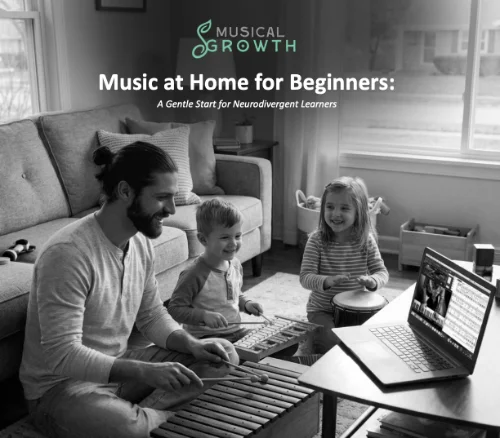
Music at Home for Beginners
A Gentle Start for Neurodivergent Learners
Bringing music into the home can feel daunting, especially when parents worry they are not “musically qualified.” But early music learning is less about expertise and more about discovery, connection, and safe creative exploration.
You do not need to read sheet music or have a trained ear to enjoy music with your child. For neurodivergent learners, music can become a flexible path for self-expression, emotional regulation, and creative confidence.
Whether it is tapping rhythms on a kitchen countertop, swaying together to a favorite song, drawing while listening to music, or playing an impromptu drum solo on pots and pans, these small acts help weave music naturally into everyday life.
Redefining Music Learning
Music learning at home does not have to mirror formal lessons or traditional school. There is no need to begin with note-reading, scales, arpeggios, or long practice sessions.
Instead, begin with simple musical experiences that invite curiosity. Singing, tapping, listening, moving, playing by ear, and exploring random sounds all count as meaningful learning.
Sing
Sing along with favorite songs, movie themes, or silly made-up melodies.
Tap
Tap rhythms on tables, pillows, floors, or anything safe nearby.
Explore
Let your child discover high sounds, low sounds, soft sounds, and loud sounds.
Create
Draw, move, dance, or invent stories while listening to music.
Short, consistent creative moments are often more useful than stressful practice sessions. A few minutes of positive engagement can build trust, confidence, and interest over time.
Why Music Helps Neurodivergent Learners
Music offers more than notes and rhythms. It can become a channel for sensory regulation, emotional expression, routine, imagination, and identity-building.
A spontaneous dance party in the living room, a calming song before bedtime, or a few minutes of instrument exploration can become a predictable ritual that helps a child reset and reconnect.
Supports emotional expression without requiring words
Encourages sensory exploration in a flexible way
Builds confidence through creative choice
Creates connection between parent and child
Helps music feel safe instead of performance-based
Where to Start
The best place to begin is with the lowest-pressure option available. Music does not need to start with an expensive instrument, a full lesson plan, or a long-term commitment.
Piano or Keyboard
A keyboard is visual and easy to explore. Children can press a key and immediately hear a sound, making it a great first instrument for discovering pitch, patterns, and musical cause-and-effect.
Voice
The voice requires no equipment. Singing favorite songs, cartoon themes, or made-up melodies can support memory, listening, pitch awareness, and emotional expression.
Rhythm Instruments
Shakers, tambourines, drums, rhythm sticks, xylophones, and glockenspiels allow children to participate without worrying about “wrong notes.”
What “Practice” Can Actually Look Like
Many parents hear the word “practice” and imagine a child sitting at an instrument for thirty minutes, repeating exercises while trying to stay focused. But in the beginning, practice can look much simpler.
Try thinking of practice as one short creative moment per day. That might mean five minutes of sound exploration, singing one favorite song, tapping a rhythm in the car, or dancing while cleaning the living room.
Find Three Sounds You Like
Invite your child to explore an instrument and choose three sounds they enjoy. Ask: Which sound feels calm? Which one feels exciting? Which one sounds funny?
High and Low Conversations
Play or sing a high sound, then invite your child to answer with a low sound. Switch roles and let them lead.
Weather Music
Ask your child to make music for rain, wind, thunder, sunshine, or snow. This connects imagination, emotion, and sound.
Copy Me
Play or sing a short pattern and ask your child to copy it. Then let them create one for you to copy.
Draw What You Hear
Play a piece of music and invite your child to draw colors, lines, shapes, or images that match what they hear.
How Do You Know If Your Child Is Ready?
Readiness is less about age and more about interest. Some children show curiosity early. Others need more time. Some may be excited one week and uninterested the next. That is normal.
Signs of musical readiness may include:
- Curiosity about sounds, songs, instruments, or movement
- Voluntarily singing, tapping, dancing, or exploring music
- Wanting to repeat a favorite song or sound
- Asking how to play or sing something
- Enjoying musical games or routines
- Taking the lead during creative play
A four-year-old might be ready for simple sound exploration. A five-year-old might enjoy imitation games and musical storytelling. A six- or seven-year-old might be ready for more structured lessons, depending on attention, interest, and emotional readiness.
But there is no rush. The first step is helping music feel safe, accessible, and enjoyable.
Common Pitfalls to Avoid
One of the easiest mistakes parents can make is turning music into another task to complete. When music becomes a power struggle, children may begin to associate creativity with stress.
Avoid Forcing Long Sessions
If your child is overwhelmed, shorten the activity. Two positive minutes are better than thirty stressful ones.
Do Not Over-Correct
Technique matters eventually, but emotional safety and curiosity matter first.
Watch for Overwhelm
Frustration, shutdowns, or avoidance may mean the activity is too long, too difficult, or too rigid.
If your child sits at the keyboard for two minutes, that counts.
If they sing one line of a song, that counts.
If they tap along to a rhythm, that counts.
If they simply listen with curiosity, that counts.
Small moments build trust. Trust builds confidence. Confidence makes deeper learning possible.
When Professional Music Lessons Can Help
Starting music at home can build a strong foundation of comfort and curiosity. Over time, some children naturally reach a point where outside guidance can be helpful.
Lessons may help if your child:
- Asks specific questions about how to play or sing
- Wants to learn favorite songs
- Shows steady interest over several weeks or months
- Enjoys gentle structure and routine
- Gets frustrated trying to figure things out alone
A supportive teacher can provide structure, encouragement, and technical guidance while still respecting your child’s pace and learning style.
The key is finding instruction that supports your child’s relationship with music rather than replacing curiosity with pressure.
Start Small and Keep It Safe
Bringing music into your home does not require perfection, expertise, or a rigid plan. It begins with access. It begins with curiosity. It begins with letting your child explore sound in a way that feels safe and inviting.
Music can become a way to express emotion, build confidence, regulate energy, and connect as a family. Some children may eventually move toward formal lessons, performances, or advanced musical study. Others may simply carry music with them as a source of comfort, play, and self-expression.
Start with one sound. One song. One rhythm. One small creative moment.
That is enough to begin.Need Help Bringing Music Into Your Home?
Musical Growth offers gentle, interest-led music lessons designed to help children build confidence, creativity, and a lasting relationship with music.
Schedule a Free Introductory Session