Incense is a growing trend in the West, whether its used in yoga sessions, church services, or massage appointments, but when it comes down to it, this spiritual tradition has been around far longer than many think.

I don’t claim to define the single, “best incense,” but I do hope to suggestion information and ideas for some great options that have been reviewed by many sources online.
This article will provide everything you need to know about purchasing incense!
The organization of this article:
- Brief History of Incense
- 6 Main Forms of Incense
- Best Incense Brands
- Best Incense for Stress
- Best Incense Per Room
- Incense Chart
- Potential Side-Effects
Brief History of Incense
As I’ve mentioned in my essential oils article, aromatherapy has been around since before 18,000 B.C.E. (French cave paintings of plants being used in medicine were carbon dated to be over 20,000 years old!).
The term “aromatherapy” was coined by the French chemist, René-Maurice Gattefossé in 1910 from an alchemy accident involving lavender essential oil (he accidentally healed a burn by dipping his hand in lavender oil – the nearest liquid during the accident!).
The Indus Civilization (3,300 to 1,300 B.C.E), a civilization with trace evidence of yoga’s beginnings, were also known to use incense. Ancient China began using incense in religious prospects such as worship around 2,000 B.C.E.
Incense is a very old, spiritual tradition and can even be seen in traditional Catholic services today. Frankincense was one of the gifts the Magi brought to the “newborn king.”
The specific origin of incense seems to point toward ancient Egyptian roots, where incense was used in rituals to “please the gods.”
But if there’s any take away from the history of incense, it’s that there is a spiritual, mental, and physical connection.
6 Main Forms of Incense
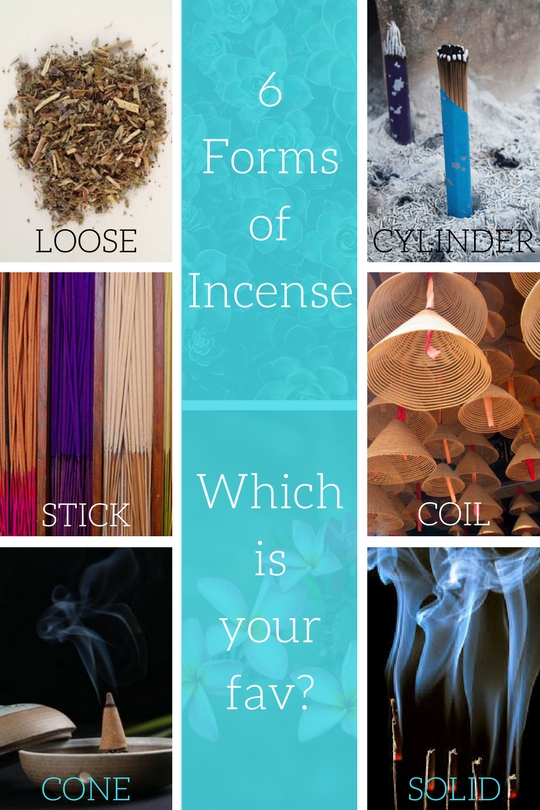
Because plant material can be shaped into many forms, the list could be much longer. The main forms of incense can be found in loose, cone, or stick form.
Before you choose what form of incense is best for you, it’s best to know all the options.
6 main forms of incense:
- Loose incense
- The oldest form of incense, but very high maintenance. You must continually supply heat or else the burning will stop. Best used for campfires with Japanese charcoal made from bamboo (due to the non-scent burning).
- Sticks with bamboo
- Most common in America and therefore, most commercially produced. Though there are high-quality options, many are low-quality and just soaked in fragrance. Be careful!
- Cones
- Stand-alone, durable cones are a great way to burn incense. Sometimes they can produce a lot of smoke though because a lot of material burns at the same time.
- Solid Sticks
- Lights easily and made in many lengths, but are fragile. Solid material burned in a bowl of rice or sand mainly.
- Cylinders
- “Most elegant” and “ultimate form” of burning incense according to SpiritualScents.com. Thickness can range from toothpick to pencil and offers an even burn and consistently regulated smoke/fragrance.
- Coil Incense
- An old Chinese tradition of burning incense where the material is circled into a spiral. This shape allows a lot of material to be molded into a small space which provides longer burn time.
Best Incense Brands
When it comes to burning plants, you MUST have good quality material. Whatever you end up burning will eventually make its way into your lung since the smoke of the incense is breathed in.
So quality should be your focus. Do some research! Your health is important.
6 of the best incense brands:
- Paine’s
- Blackbird
- Shoyeido
- Juniper Ridge
- Nippon Kodo
- Incienso de Santa Fe
When it comes to brands of incense, there seems to be a lot and it becomes overwhelming!
But just like teas or most foods, just make sure there is a statement of quality such as “no hidden ingredients,” “no charcoal or perfume,” “all natural – no synthetic oils or fragrances,” “100% unused an authentic,” etc.
 Shoyeido, for instance, states their Golden Pavilion incense is made in Kyoto, Japan with exclusive family-owned recipes that are over 300-years old.
Paine’s Balsam Fir incense states that it’s made from sustainable tree trimmings with all natural materials. A great plus to know you’re buying from a conscientious company.
Juniper Ridge tends to always mention their ancient incense is sustainably harvested and has no hidden ingredients (no charcoal or perfume) such as their Smudge Stick Cedar variety pack.
Hopefully, these examples can help educate you to what you should see – don’t fall victim to the uninformed consumer traps!
Best Incense for Stress
Most people turn to incense as a stress relief method, which there’s a good reason! So this list will highlight some of the best types of incense known to help relax and relieve stress.
6 incense for stress:
- Sandalwood
- Jasmine
- Lavender
- Pine
- Chamomile
- Lemongrass
Best Incense Per Room
If you want to be more specific with your type of incense, consider the purpose. What do you want from incense? And where do you want the benefits? Which room?
Here are a few incense options per room recommended by Well + Good. If anything, it will make you think and give you food for thought. Everyone’s different in their needs, but these common incense types are great for specific rooms.
Best incense per room:
- Kitchen
- Cedar, palo santo, bergamot
- Bedroom
- Lavender, juniper
- Living Room
- Sage, eucalyptus
- Bathroom
- Pine, eucalyptus, lavender, yerba santa
Incense Chart
The information provided below is from Raven and Crone. Because of the long tradition of incense, there are some old known reasons to burn certain materials.
Click one of the incense types below to price check on Amazon!
Although many of the benefits listed below are not as applicable, it is still interesting to read about the old-fashioned descriptions of each type of incense effect.
How the links were chosen:
- Each type of incense in the list was research for the best quality on Amazon
- The first preference was bamboo stick incense
- The second was cone or coil
- The third was raw ingredients
- With raw ingredients, you can shape incense yourself!
~ Chart of Over 85 Different Incense ~
| Acacia – stimulate psychic powers
Ambergris – for dreams and aphrodisiac Anise seeds – for meditation and emotional balance Bay – stimulates psychic powers and induces prophetic dream-visions Bayberry – attracts money, happiness, control, and protection Benzoin – for purification, negative energy dissipation, emotional balance, antidepressant, grief, anxiety, and astral projections Bistort – aid in divination Cardamom – for mental clarity, confidence, courage, concentration, enthusiasm, and motivation Cedar – for purification, stimulate/strengthen psychic powers, prevent nightmares, heal various ailments (head colds), and attract love Chamomile – for harmony, peace, and calm Citron – for rituals in healing and to strengthen psychic powers Clove – dispels negativity and purifies sacred spaces, attracts money, relieves pain, stimulates intellectualism, wealth, protection, improves memory and focus Cypress – for strength, healing, comfort, anxiety, stress, self-assurance, confidence, willpower, and concentration Dittany of Crete – aid for divination and astral projection Elecampane – strengthens clairvoyant powers and divination Fern – to instigate rain and exorcise evil supernatural entities Fumitory – to exorcise evil entities, demons, and poltergeists Galangal – to break curses Ginger – attracts wealth, lust, healing, and love Gotu Kola – aid in meditation Hibiscus flowers – attracts lust, love, and divination Horehound – usually an offertory incense to Horus, an ancient Egyptian god Jasmine – attracts money, love, purification, wisdom and induces dreams of prophetic nature Lavender – induces sleep, attracts love (especially of a man), and used for healing, cleansing, happiness, and relaxation Lotus – elevates mood and attracts protection, healing, spirituality, and aids meditation Mint – increases libido, exorcise evil entities, conjure good spirits, attracts money, and aids in healing due to the protective powers Myrrh – for purification, healing, consecration, exorcism, and meditation (also for ancient Egypt deities like Isis and Ra) Oakmoss – attracts money and attraction Patchouli – attracts money, growth, love, mastery, fertility, and sensuality Pine – for purification, exorcism, attracts money, strength, healing, cleansing, and breaks hexes Rose geranium – for protection and courage Rosemary – to purify, heal, dispel depression, prevent nightmares, preserve youthfulness, and promote sleep Sagebrush – aids healing and banishes evil/negative energies Sandalwood – for exorcism, protection, healing, and astral projection Star Anise Seeds – stimulates psychic powers Sweetgrass – to conjure good spirits Thyme – for purification and healing Vervain – for exorcism Violet – for wisdom, luck, protection, healing, and love Willow – to promote healing, attract love, and protect against evil Ylang-Ylang – for love, euphoria, and harmony |
Allspice – attracts both money and good luck
Althea – for protection and psychic power stimulation African violet – for protection and spirituality within the home Aloes – attracts love, strength, good fortune, and spiritual vibrations Amber – for love, happiness, healing, and comfort Angelica – for protection, integration, harmony, insight, understanding, stability, and meditation Basil – for protections against evils (demons/unfriendly ghosts) and attract fidelity, love, wealth, and sympathy. Good for concentration, trust, integrity, mental clarity, courage, and confidence. Bergamot – for prosperity, joy, money, alertness, balance, strength, courage, motivation, and uplifting of spirits Bracken – for outdoor fires to magically produce rain Carnation – for protection, healing, love, lust, and strength Cedarwood – for purification, healing, money, protection, grounding, clarity, balance, wisdom, and insight Cinnamon – attract protection, money, wealth, prosperity, business success, healing aid, strength, and lust stimulation Citronella – burn for cleansing, healing, and exorcism; also repels insects Coconut – for protection Copal – for purification, protection, exorcism, and to attract love Damiana – facilitates psychic visions Dragon’s Blood – dispels negativity, exorcise evil entities, attracts love, courage, purification, and restores male potency Eucalyptus – for purification, healing, and protection Frankincense – to dispel negativity and purify spaces as well as aid in meditation and induce courage, protection, psychic visions, and attract good luck Gardenia – attracts peace, healing, and love Ginseng root – protection against evil spirits and all forms of evil Heather – to conjure good spirits and magically produce rain Honeysuckle – attract money, friendship, healing, and happiness Hyacinth – attracts happiness and protection Juniper – stimulates psychic powers and breaks curses as well as attracts calm, protection, and healing Lemon – for healing, purification, and love Lemongrass – for mental clarity Licac – stimulates psychic powers and attracts harmony in life Mace – stimulates psychic powers Mesquite – added to incense to improve healing powers Musk – for prosperity, courage, and acts as an aphrodisiac Nutmeg – aids meditation, attracts prosperity and stimulates psychic powers Orange – for love, luck, money, and divination Peppermint – for energy, exorcism, healing, and mental stimulation Poppy seeds – promotes female fertility and attracts luck, money, and love Rose – increases courage, prophetic dreams, and attracts healing and love (strongest powers for love) Rue – for healing Sage – for protection against evil, for purification, and attracts wisdom, money, healing, and clarity for the body, mind, and soul Solomons Seal – often burnt for ancient Pagan deities Strawberry – attracts love and luck Sweet Pea – for courage, love, and friendship Vanilla – attracts love, sexual desire, and to improve the mind Vetivert – to break curses, attract money, peace, and love, and protect against black magic and thieves Wisteria – protects against all forms of evil Wormwood – stimulates psychic powers Yarrow – for exorcism and promoting courage |
Potential Side-Effects
Incense involves smoke and when it comes to burning certain materials, side effects can often be found. So how bad is incense?
A lot of research is available online, but due to the nature of this article, I’ll only be introducing a few ideas behind the possible issues behind incense. There are a lot of variables when it comes to incense due to the differences in material and type of burn, so always do your research and purchase the best quality, PURE materials.
Remember. Whatever you burn, will be breathed in. Don’t buy materials with artificial components like fragrance-soaked incense or coal particles.
According to a few sources provided by Dr. Axe, burning incense has four dangers to keep in mind:
- Causes inflammation in the lungs
- It is a type of air pollution
- Could produce more particles than cigarette smoke
- Increases risk of UPT (upper respiratory tract carcinomas)
Definitely, keep in mind that incense is not much better than cigarettes or cigars because it is still involves burning plants. So although it won’t kill you, it isn’t necessarily good for your lungs.

But everything in moderation. The more incense you burn, the more risk of danger. Once or twice a week shouldn’t be too bad, but to be safe, please consult a healthcare professional before attempting incense yourself (there’s my disclaimer for incense!).
Conclusion
Incense is commonly used as an aid for meditation, yoga, relaxation, and massage sessions. But throughout history incense has been used as a spiritual aid more than the Westernized purpose of health benefits.
I hope this article has helped bring to light the possibilities of incense and the best ways to go about starting your incense hobby. Just keep in mind to read the possible side-effects section and pursue incense in moderation.
Do you use incense? What is your favorite benefit of incense? Let me know in the comments below! I’m excited to hear from you.
Thanks for reading! Sign up for the newsletter to hear more about health fads, research, and other aids for meditation (such as music!).
Chase
March 2018

Sources
Christianity and Incense Symbolism
Raven&Crone; – Magickal Properties of Incense